Patch-tracked guide
Valheim Capes & Resistances (1.0) — Frost, Fire, Poison & Fall Protection
Every cape grants 1/2/3/4 armor by quality. Wolf Fur and Lox capes grant frost resistance (0.5x); resistance sources and how to survive Mountains and Ashlands.
By Valheim Field Guide Editorial Team
Need the exact numbers? Browse the Database →
Quick answer: Every cape gives the same armor (1 / 2 / 3 / 4 by quality) — you pick a cape for its effect, not its armor. Wolf Fur and Lox capes grant frost resistance (0.5x), which is what makes the Mountains survivable without a fire; Feather Fall cancels fall damage. Elemental resistances also come from meads, and they do not stack with each other.
Why capes matter
Armor only handles physical damage. Fire, frost, poison and lightning are handled by a separate resistance system, and capes are the main place that resistance comes from. A cape is the fourth armor slot: most capes give very little armor and are worn entirely for their effect.
Verified (1.0): the per-quality armor values and cape effects below are confirmed against valheim.wiki (1.0). The two Deep North capes (Moose Hide, Cape of the Caller) carry 12 base armor each, confirmed by four independent community sources (valheim.wiki’s pages for them are still work-in-progress) — so the “12 armor” figure is now verified, not merely community-sourced. See our verification workflow.
Confirmed cape values (valheim.wiki, 1.0)
Armor at quality 1/2/3/4. Every cape gains +1 armor per upgrade level, except the Ashen cape, which gains +2.
| Cape | Armor (Q1–Q4) | Confirmed effects |
|---|---|---|
| Deer Hide | 1 / 2 / 3 / 4 | — |
| Troll Hide | 1 / 2 / 3 / 4 | Troll set bonus: +15 Sneak |
| Wolf Fur | 1 / 2 / 3 / 4 | Frost resistance (0.5x) |
| Lox | 1 / 2 / 3 / 4 | Frost resistance (0.5x) |
| Linen | 1 / 2 / 3 / 4 | — |
| Feather | 1 / 2 / 3 / 4 | Fall damage −100%, fall speed capped at 5 m/s, −20% jump stamina; frost resistance (0.5x), weak to fire (2x) |
| Asksvin | 1 / 2 / 3 / 4 | Frost resistance (0.5x), −15% dodge stamina |
| Ashen | 12 / 14 / 16 / 18 | Frost resistance (0.5x), −10% attack stamina, −20% block stamina |
| Moose Hide (Deep North) | 12 / 13 / 14 / 15 | Frost resistance (0.5x), −20% attack stamina, −20% run stamina |
| Cape of the Caller (Deep North) | 12 / 13 / 14 / 15 | Frost resistance (0.5x), +20% Eitr regeneration, −10% dodge stamina |
The two Deep North capes carry 12 base armor each (confirmed by four independent community sources; valheim.wiki’s pages for them are still work-in-progress), so they follow the standard +1-per-upgrade rule to 15 at Q4. Both are frost-resistant, not fire-resistant — the Deep North’s hazard is the cold, and its fires are handled separately.
Every cape by biome
| Cape | Biome | What it is for |
|---|---|---|
| Deer Hide Cape | Meadows | Early cosmetic/light cape, no special resistance |
| Troll Hide Cape | Black Forest | Pairs with the Troll set for a sneak bonus |
| Wolf Fur Cape | Mountain | Frost resistance — the cape that makes the Mountains survivable |
| Lox Cape | Plains | Frost resistance from Plains materials |
| Linen Cape | Plains | General late-mid cape |
| Feather Cape | Mistlands | Feather Fall — removes fall damage on the vertical Mistlands terrain |
| Asksvin / Ashen Cape | Ashlands | Frost resistance (not fire — counterintuitive) plus the highest cape armor; Ashlands fire/heat is handled by meads, the Fenris set and Flametal |
| Moose Hide Cape | Deep North (1.0) | Frost resistance from Deep North moose hides — the cold-hazard cape for the final biome |
| Cape of the Caller | Deep North (1.0) | Frost resistance + 20% Eitr regeneration for magic builds in the Deep North, with 10% reduced dodge stamina cost; 12 armor |
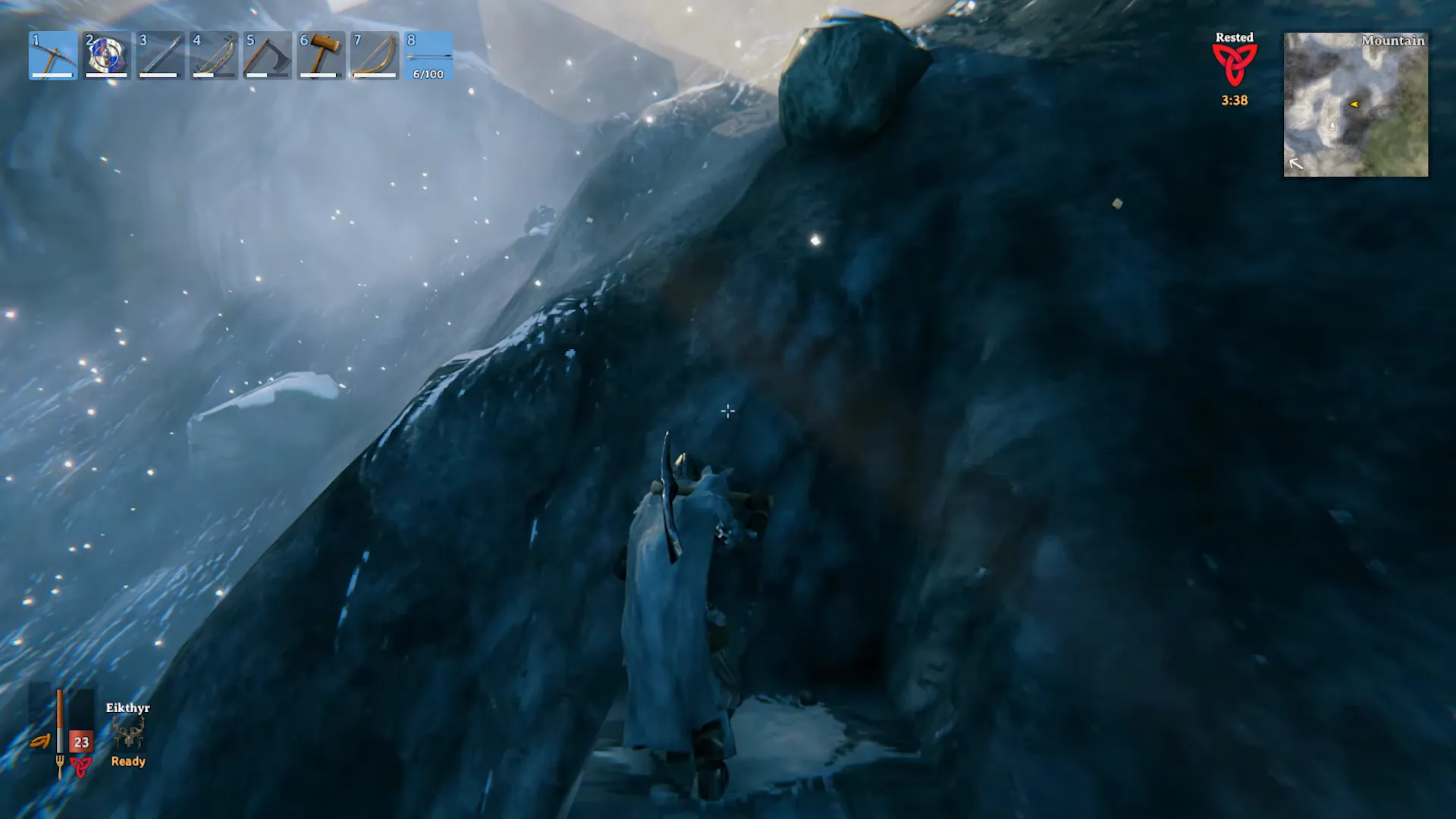
The pattern: each biome has a cape that helps with a hazard. Frost in the Mountains, fall damage in the Mistlands — and, counterintuitively, the Ashlands capes (Asksvin/Ashen) also give frost rather than fire. Match the cape to the biome you are entering, and cover Ashlands fire separately (see below).
All the sources of resistance
You rarely rely on the cape alone. Resistance comes from combining sources:
- Capes — the primary, always-on source (Wolf Fur for frost, Asksvin/Ashen also for frost, Feather for fall damage).
- Armor set effects — the Wolf Armor chest grants frost resistance; the Fenris set grants fire resistance.
- Meads — fire, frost and poison resistance meads give temporary protection, ideal as a bridge before your cape is ready.
- Food — a small number of dishes contribute resistances.
Because these stack and overlap, you can cover a hazard more than one way. In the Mountains, for example, a Wolf Fur Cape and a Wolf Armor chest both push your frost resistance up.
Practical survival by hazard
- Mountains (frost): Craft a Wolf Fur Cape or Lox Cape, or wear the Wolf Armor chest. Carry a frost mead for the trip up before you have the cape. See the Mountain biome guide.
- Ashlands (fire and heat): Fire resistance comes from the Fenris set, a fire mead and (for boss fights) Fader’s power — not from a cape; the Asksvin/Ashen capes here give frost. Heat damage from lava and boiling water is cut by Flametal’s heat resistance. High armor alone will not keep you alive here. See the Ashlands biome guide.
- Mistlands (fall damage): The Feather Cape’s Feather Fall removes fall damage, which matters on the steep, vertical terrain. See the Mistlands biome guide.
- Deep North (frost, 1.0): The Moose Hide Cape gives you the frost resistance the cold requires, and the Cape of the Caller is the pick for magic builds — it stacks frost resistance with Eitr regeneration. See the Deep North biome guide.
- Swamp (poison): Poison resistance meads help against the poison-heavy enemies until your gear catches up.
Related
- The physical side of your defense budget: armor sets
- Where resistance meads come from: food and meals
- Full elemental and biome breakdown: progression route

Found this helpful? Support the wiki ☕
Buy me a coffeeFrequently asked questions
- What do capes do in Valheim?
- Capes are the fourth armor slot. Most give only a small amount of armor — you wear them for their special effect, usually an elemental resistance (frost, fire) or a utility bonus like fall protection or sneak. Pick the cape for the biome hazard you are facing, not for armor value.
- How do I survive the cold in the Mountains?
- You need frost resistance. A Wolf Fur Cape or Lox Cape provides it, and the Wolf Armor chest piece also grants frost resistance. Before you have those, a frost resistance mead buys time. Without frost resistance the cold drains your health continuously.
- Where does elemental resistance come from?
- From several sources that you combine: capes, armor set effects (Fenris gives fire resistance, Wolf gives frost), meads (fire/frost/poison), and some foods. Armor value itself does not resist elements — that is a separate system.
- Do resistances stack in Valheim?
- Yes. Resistance comes from several sources you combine — capes, armor set effects, resistance meads and a few foods. They overlap and stack, so in the Mountains a Wolf Fur Cape and a Wolf Armor chest both push your frost resistance higher.
- What cape do I need for the Ashlands fire hazard?
- Counterintuitively, the Ashlands capes (Asksvin and Ashen) give frost resistance, not fire — the Ashlands fire and heat are handled separately by the Fenris set, a fire resistance mead, Fader's power and Flametal's heat resistance. No cape covers Ashlands fire.
- Are there capes in the Deep North?
- Yes, two: the Moose Hide Cape (12 base armor, frost resistance, -20% attack and run stamina) and the Cape of the Caller (12 base armor, frost resistance and +20% Eitr regeneration for magic builds). Both counter the Deep North's cold.
Related guides
- Valheim Best Bow (1.0) — Every Bow & Crossbow, Ranked by Damage
Every Valheim bow and crossbow with base pierce damage, crafting station and progression tier — plus arrow damage, so you can pick the best ranged weapon for your biome.
Verified Valheim 1.0 - Valheim Block Armor vs Block Force — What Each Shield Stat Does (1.0)
Block Armor cuts the damage you take while blocking; Block Force is the knockback you shove back at the attacker. How both stats work, the stagger bar, and every shield compared.
Verified Valheim 1.0 - Valheim Moulds & Casts (1.0) — Every Mould and What It Casts
How Valheim moulds and casts work, with every mould item grouped by the gear it produces — metal, armor and weapon casting in 1.0.
Verified Valheim 1.0
Related in the database
Compare the 181 weapons and 169 armors weapons and armors, with stats and crafting recipes.
Found an error?
If a number, drop, cost or interaction looks wrong in your game, we want to hear about it.